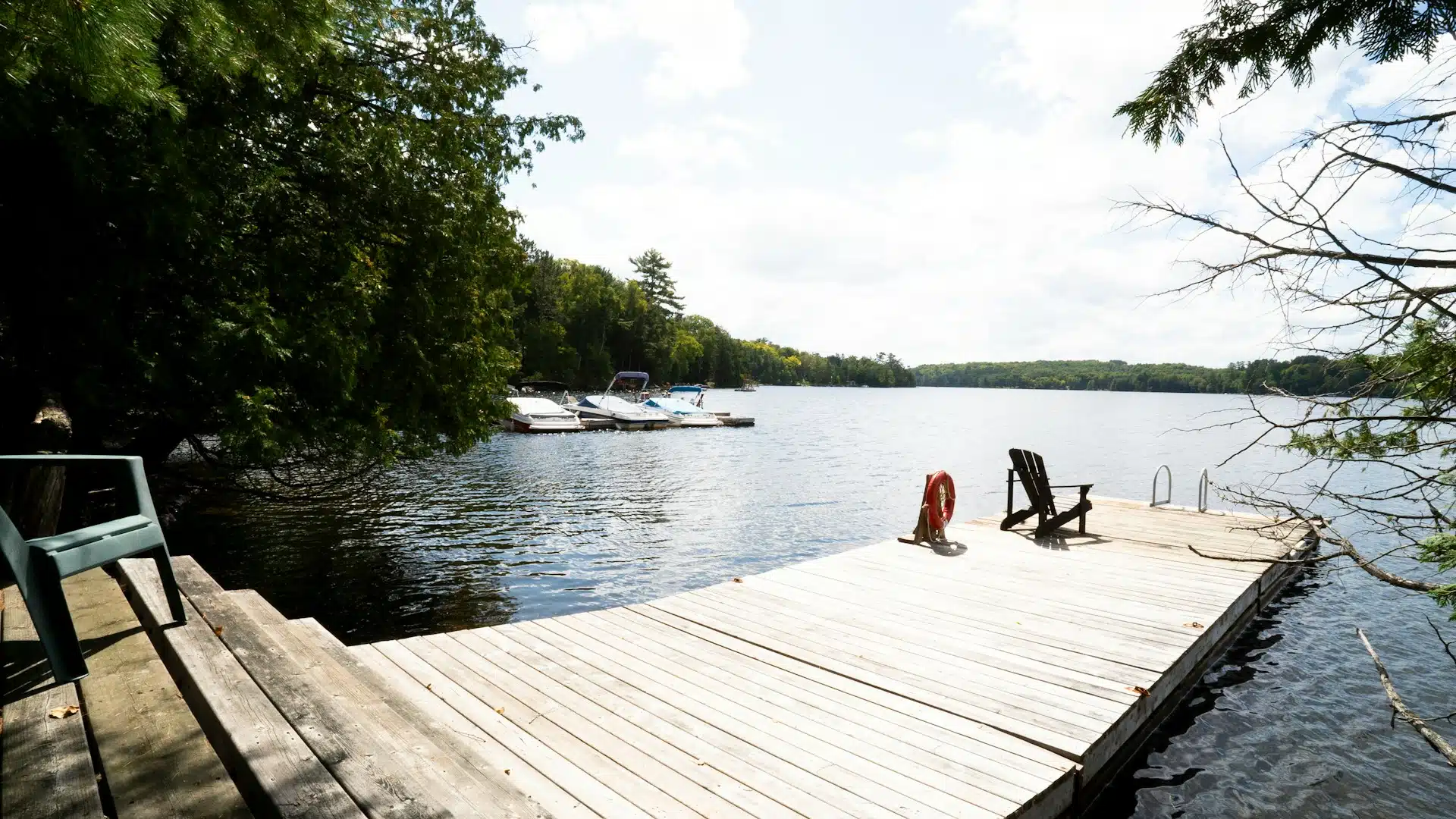
Ontario summers bring many people to the province’s lakes, rivers, and cottage communities. Cottages and waterfront docks are popular destinations, whether a weekend getaway to Muskoka, a family holiday in the Kawarthas, or a rental property in the Thousand Islands. Unfortunately, these relaxing retreats can also be the scene of serious accidents. Slippery docks, unstable structures, unsafe swimming areas, and poorly maintained properties can lead to injuries that ruin a holiday and have lasting physical, emotional, and financial consequences.
In Ontario, when someone is injured on cottage or dock property, the Occupiers’ Liability Act plays a central role in determining who is responsible and whether the injured person is entitled to compensation. Understanding the law and its application to these seasonal properties can help injured individuals protect their rights and navigate the claims process.
Cottage and Dock Accidents: Common Summer Hazards
The hazards associated with cottages and docks are often underestimated because they are linked with leisure and relaxation. However, these settings can be dangerous if not properly maintained or monitored. Common examples include broken or rotting boards on docks, loose railings, algae-covered surfaces that become dangerously slippery when wet, and inadequate lighting at night.
Beyond structural problems, hazards may also arise from the surrounding environment. Shallow water, submerged rocks, and strong currents pose serious risks to swimmers and boaters. Inadequate signage or failure to warn guests about these risks can lead to tragic consequences. When alcohol is involved, as it often is during summer gatherings, the likelihood of accidents increases even further.
The Role of the Occupiers’ Liability Act
The Occupiers’ Liability Act (the Act) governs the responsibilities of those who own or control property in Ontario. Under the Act, an “occupier” is not only the property owner but can also be a tenant, property manager, or anyone responsible for the condition of the premises, the activities conducted there, or the people allowed to enter.
The Act imposes a duty of care on occupiers to ensure that people entering the property are reasonably safe. This duty applies to all types of premises, including private residences, rental cottages, commercial resorts, and the associated docks or waterfront structures. The law covers both the physical state of the property and the activities that occur on it.
Duty of Care and Reasonable Safety
The central principle under the Occupiers’ Liability Act is that occupiers must take reasonable steps to keep visitors safe. What is considered “reasonable” depends on the circumstances, including the type of property, its use, and the nature of the risk. For example, the standard of care for a cottage hosting paying guests through a short-term rental platform like Airbnb may be higher than for a private family cottage used only by friends and relatives.
Importantly, the duty of care extends to all lawful visitors, whether social guests, paying customers, or service providers like dock repair crews. In some situations, occupiers also owe a duty to certain trespassers, especially children, under what is known as the “allurement” doctrine, where something on the property (like a dock or watercraft) could attract them and pose a danger.
Cottage and Dock Injuries Under Ontario’s Occupiers’ Act
The scope of the Occupiers’ Liability Act means that various accidents may be grounds for a claim. Common examples in cottage and dock environments include:
- Falls from docks due to broken boards or missing safety rails
- Slips caused by algae, moss, or other slippery substances on wet surfaces
- Injuries from collapsing decks, stairs, or dock structures
- Diving injuries caused by shallow water or hidden underwater hazards
- Boating accidents occurring from poorly maintained or improperly secured docks
- Electrocution risks from faulty dock wiring for lighting or boat lifts.
In these cases, liability depends on whether the occupier took reasonable steps to prevent foreseeable harm. For example, an occupier who ignores clear signs of structural decay on a dock, or who fails to provide adequate warnings about shallow water, may be found negligent if someone is injured.
Short-Term Cottage Rentals and Liability
In recent years, short-term rental platforms such as Airbnb and Vrbo have changed the landscape of cottage ownership and use in Ontario. Many people now rent out their cottages to strangers, often without realizing the full extent of their legal responsibilities under the Occupiers’ Liability Act.
When a paying guest is injured at a rental cottage or on its dock, the host may face significant liability if it can be shown that they failed to ensure the property was reasonably safe. This may include conducting regular inspections, making timely repairs, and warning guests about potential hazards. In some cases, liability may also extend to the rental platform or a property management company, depending on the contractual arrangements and level of control over the property.
Cottage Guests and Shared Responsibility
While the Occupiers’ Liability Act focuses on the occupier’s responsibilities, injured guests also have a role to play in their own safety. If an injured person ignores clearly posted warnings, engages in risky behaviour, or is impaired by alcohol or drugs, their compensation may be reduced under Ontario’s contributory negligence rules.
For example, if a guest dives into clearly marked shallow water despite warnings, they may share fault for any resulting injury. This does not necessarily mean they cannot recover damages, but the amount awarded may be reduced in proportion to their share of the blame.
Evidence in Cottage and Dock Injury Claims
Proving an occupier’s negligence requires evidence. In cottage and dock injury cases, this often includes photographs of the hazard, witness statements, maintenance records, and incident reports. For rental properties, online listings and guest communications can also be important in showing what representations were made about safety features or conditions.
Medical documentation is critical in establishing the nature and extent of the injury, as well as linking it directly to the incident. In serious injury cases, such as spinal cord injuries from diving accidents, expert evidence may be necessary to prove both causation and the long-term impact on the injured person’s life.
Potential Damages in Ontario Cottage Injury Cases
If an occupier is found liable under the Occupiers’ Liability Act, the injured person may be entitled to compensation for a range of losses. These may include medical expenses, rehabilitation costs, lost income, loss of earning capacity, pain and suffering, and out-of-pocket expenses. In severe cases, claims for future care costs and modifications to living arrangements may be significant.
Families of those who suffer fatal injuries may also have claims under Ontario’s Family Law Act, which allows certain relatives to seek compensation for loss of care, guidance, and companionship, as well as funeral expenses.
Time Limits for Bringing a Claim
Ontario law imposes strict limitation periods for personal injury claims, including those under the Occupiers’ Liability Act. In most cases, an injured person has two years from the date of the accident to file a lawsuit. However, there are exceptions, particularly when the injured party is a minor or if the injury was not discovered until later.
Notice requirements can be much shorter for incidents involving municipal properties such as public docks or waterfront parks. In some cases, written notice must be provided within 10 days of the accident. Missing these deadlines can result in losing the right to sue, making prompt legal advice essential.
Protecting Your Rights After a Cottage or Dock Accident
Summer cottage and dock accidents can change lives in an instant. While these injuries occur in settings associated with rest and recreation, the legal principles that apply are serious and far-reaching. Ontario’s Occupiers’ Liability Act ensures that those who control property, whether owners, tenants, or managers, take reasonable steps to keep visitors safe.
If you or a loved one has been injured at a cottage or on a dock, understanding your rights under the Act is the first step toward recovery. Consulting with a personal injury lawyer early can help preserve evidence, meet critical deadlines, and pursue fair compensation for your losses.
Tierney Stauffer LLP: Premises & Occupier’s Liability Lawyers
If a serious accident has impacted your life, whether from a slip and fall, a trip on a sidewalk, or a cottage or dock injury, you don’t have to face it alone. The client-centred and approachable team at Tierney Stauffer LLP has over 35 years of experience guiding hundreds of injured individuals. We can help you understand your legal options, aid in your recovery, and work to secure the compensation you deserve.
Contact us today at 1-888-799-8057 or online to schedule a free, no-obligation consultation with one of our experienced personal injury lawyers.