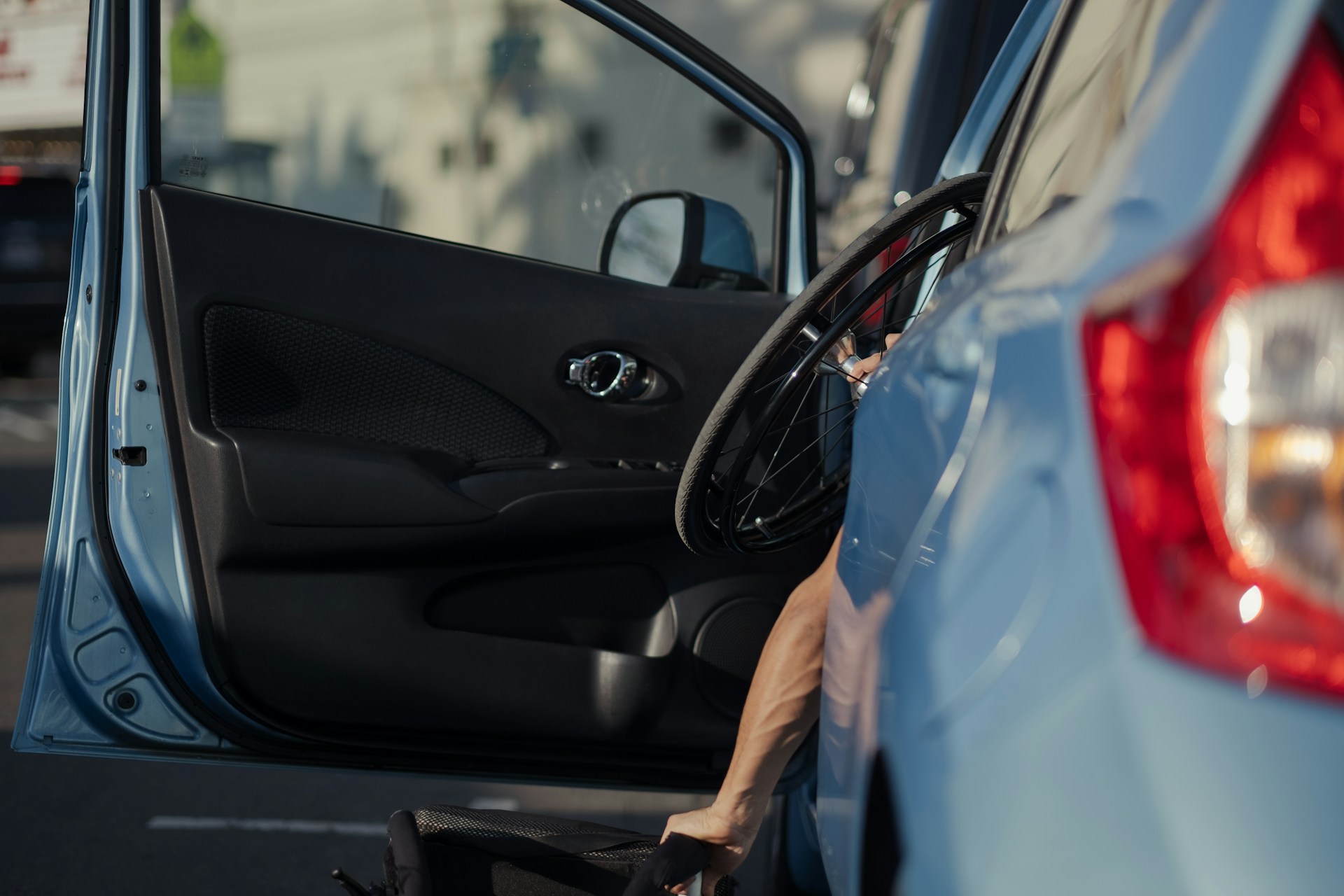
Cyclists travelling through Ontario communities often share narrow streets with moving traffic, parked vehicles, delivery activity, and transit stops. One serious risk can arise when someone inside a parked vehicle opens a door into a cyclist’s path.
Commonly known as “dooring,” this type of collision can cause a bicyclist to strike the door, lose control, or be thrown into an active traffic lane. Although the motor vehicle may be stationary, the resulting injuries can be significant.
Dooring accidents can also raise questions about reporting obligations, insurance coverage, responsibility, and compensation.
What Is a Dooring Accident?
A dooring accident generally occurs when a driver or passenger opens a vehicle door into the path of an approaching cyclist. The cyclist may collide with the door directly or take evasive action that results in a fall or secondary collision.
These incidents often occur where parking spaces are located beside cycling routes or travel lanes. A painted bicycle lane may not eliminate the risk when it runs directly beside parked vehicles.
Dooring may involve drivers or passengers exiting private cars, taxis, rideshare vehicles, or delivery vehicles. Anyone opening a door toward moving traffic should check for approaching cyclists.
Ontario Law Requires Precautions Before Opening a Door
Section 165 of Ontario’s Highway Traffic Act prohibits a person from opening a motor vehicle door on a highway without first taking precautions to ensure the action will not interfere with or endanger another person or vehicle.
The legislation also prohibits leaving a door open on the side available to moving traffic for longer than necessary to load or unload passengers. These obligations apply to passengers as well as drivers.
Improperly opening a vehicle door can result in a fine and demerit points upon conviction. A traffic charge and a personal injury claim are separate matters, however. Civil responsibility is assessed according to the evidence and legal principles applicable to the particular accident.
Why Dooring Collisions Can Cause Serious Injuries
Cyclists have little physical protection from the force of a collision. Even at a moderate speed, striking a solid vehicle door can result in serious harm.
Common injuries may include fractures involving the wrists, arms, shoulders, collarbone, ribs, face, or legs. Cyclists may also experience concussions or traumatic brain injuries (TBI), dental injuries, cuts, nerve damage, or soft tissue injuries.
Some cyclists are thrown over the door or handlebars. Others fall toward curbs, concrete barriers, streetcar tracks, or moving vehicles. The consequences may be particularly severe when the cyclist is knocked into an active traffic lane.
Who May Be Responsible?
Responsibility depends on how the accident occurred. Relevant considerations may include whether the person opening the door checked the vehicle’s mirrors and blind spots, whether the door was opened suddenly, and whether the cyclist had time or space to react.
The cyclist’s conduct may also be examined. Evidence concerning speed, road position, visibility, lighting, attentiveness, and the surrounding traffic conditions may be relevant. Ontario encourages cyclists to maintain space from curbs and parked vehicles where practical. Cyclists may also use another part of the lane when necessary to avoid obstacles or travel safely.
This guidance does not automatically determine responsibility. A complete assessment may require photographs, video recordings, witness statements, medical records, and evidence about the road’s layout.
Can Responsibility Be Shared?
Ontario negligence claims may involve contributory negligence. Responsibility can potentially be divided when the conduct of more than one person contributed to the collision or resulting injuries.
An insurer or defendant might allege that the cyclist was travelling too close to parked vehicles, riding too quickly for the conditions, using a phone, or failing to use adequate lighting. The cyclist may dispute those allegations or argue that the door opened too suddenly to avoid.
The outcome will depend on the evidence. The fact that a cyclist collided with an open door does not, by itself, resolve every issue involving fault or compensation.
Reporting an Ontario Dooring Accident
Ontario’s accident-reporting provisions specifically address collisions involving cyclists and vehicle doors. An accident must be reported immediately to the nearest police officer when an open or opening motor vehicle door comes into contact with a cyclist, bicycle, or moving vehicle.
After a collision, the parties should remain at the scene when it is safe and exchange identifying and insurance information. Emergency services should be contacted when someone is injured or requires immediate assistance.
Depending on the location and seriousness of the incident, the cyclist may be directed to speak with police at the scene or attend a collision reporting centre.
Evidence Can Disappear Quickly
Conditions around a dooring accident can change within minutes. The vehicle may leave, witnesses may continue on their way, and nearby traffic may return to normal.
When possible, photographs or video should document the vehicle, licence plate, road markings, bicycle damage, parking layout, weather, lighting conditions, and visible injuries. Witness names and contact information may also be important.
The collision could have been captured by dashboard cameras, nearby businesses, transit vehicles, doorbell cameras, or municipal systems. Because recordings may be retained for a limited time, early identification of potential footage can be valuable. The cyclist’s helmet, clothing, bicycle, electronic cycling data, and damaged personal property may also provide relevant evidence.
Medical Attention and Injury Documentation
Some injuries may not be immediately apparent. Symptoms of concussion, soft tissue damage, psychological trauma, or internal injury can become more noticeable after the initial shock of the collision has passed.
Medical assessment can help identify injuries and create a record of symptoms, treatment recommendations, and functional restrictions. Cyclists should accurately describe how the accident occurred and report changes in their condition.
Medical records may also help document the effects of the injuries on employment, education, caregiving responsibilities, mobility, sleep, recreation, and daily activities.
Insurance Coverage After a Dooring Accident
Because dooring involves the use of a motor vehicle, an injured cyclist may have access to Ontario’s statutory accident benefits system. These benefits may be available regardless of who caused the accident, although eligibility depends on the circumstances and applicable insurance coverage. Medical, rehabilitation, and attendant care benefits remain mandatory under Ontario auto policies. Since July 1, 2026, access to benefits such as income replacement, caregiver, housekeeping, and certain expense benefits may depend on whether optional coverage was purchased.
Identifying the correct insurer can be complicated when the injured person was cycling. The claim may involve the cyclist’s automobile insurer, an insurer connected to a household member, the insurer of the vehicle involved, or Ontario’s Motor Vehicle Accident Claims Fund.
An injured cyclist may also have a separate tort claim against one or more parties whose conduct contributed to the accident. A tort claim may address losses not fully covered through accident benefits, subject to Ontario law and the available evidence.
Financial Losses May Extend Beyond Treatment Costs
The consequences of a dooring accident may continue long after the cyclist leaves the scene. Injuries can affect a person’s ability to work, attend school, operate a business, care for family members, or complete everyday tasks.
Potential losses may include medical and rehabilitation expenses, damaged cycling equipment, transportation costs, income loss, reduced earning capacity, and the cost of assistance with daily activities.
The nature and value of a claim will depend on the seriousness and duration of the injuries, available insurance coverage, responsibility for the collision, and the supporting evidence.
Preventing Dooring Accidents
Drivers and passengers can reduce dooring risks by checking mirrors, blind spots, and the area beside the vehicle before opening a door. One preventive technique is known as the “Dutch Reach.” A person uses the hand farthest from the door to open it, naturally turning their body toward the window and making approaching cyclists easier to see.
Cyclists can remain alert for occupied vehicles, illuminated brake lights, recently parked cars, taxis, and delivery vehicles. Where practical, maintaining space from parked vehicles may provide additional reaction time.
Even careful road users cannot prevent every collision. Safe infrastructure, driver and passenger awareness, and compliance with traffic laws all play a role in reducing dooring risks.
Injured in an Ontario Bicycle Dooring Accident? Contact Tierney Stauffer LLP
A collision with an open vehicle door can leave an Ontario cyclist facing painful injuries, lost income, damaged equipment, and a complicated insurance process. At Tierney Stauffer LLP, our personal injury lawyers assist injured cyclists with accident benefit applications and personal injury claims arising from dooring accidents involving parked cars, taxis, rideshare vehicles, delivery vehicles, and other motor vehicles. We can review the circumstances, identify potentially available insurance coverage, and explain the claims process.
Contact us online or call 1-888-799-8057 to arrange a consultation about a cycling accident in Ottawa, Cornwall, Kingston, North Bay, or elsewhere in Ontario.