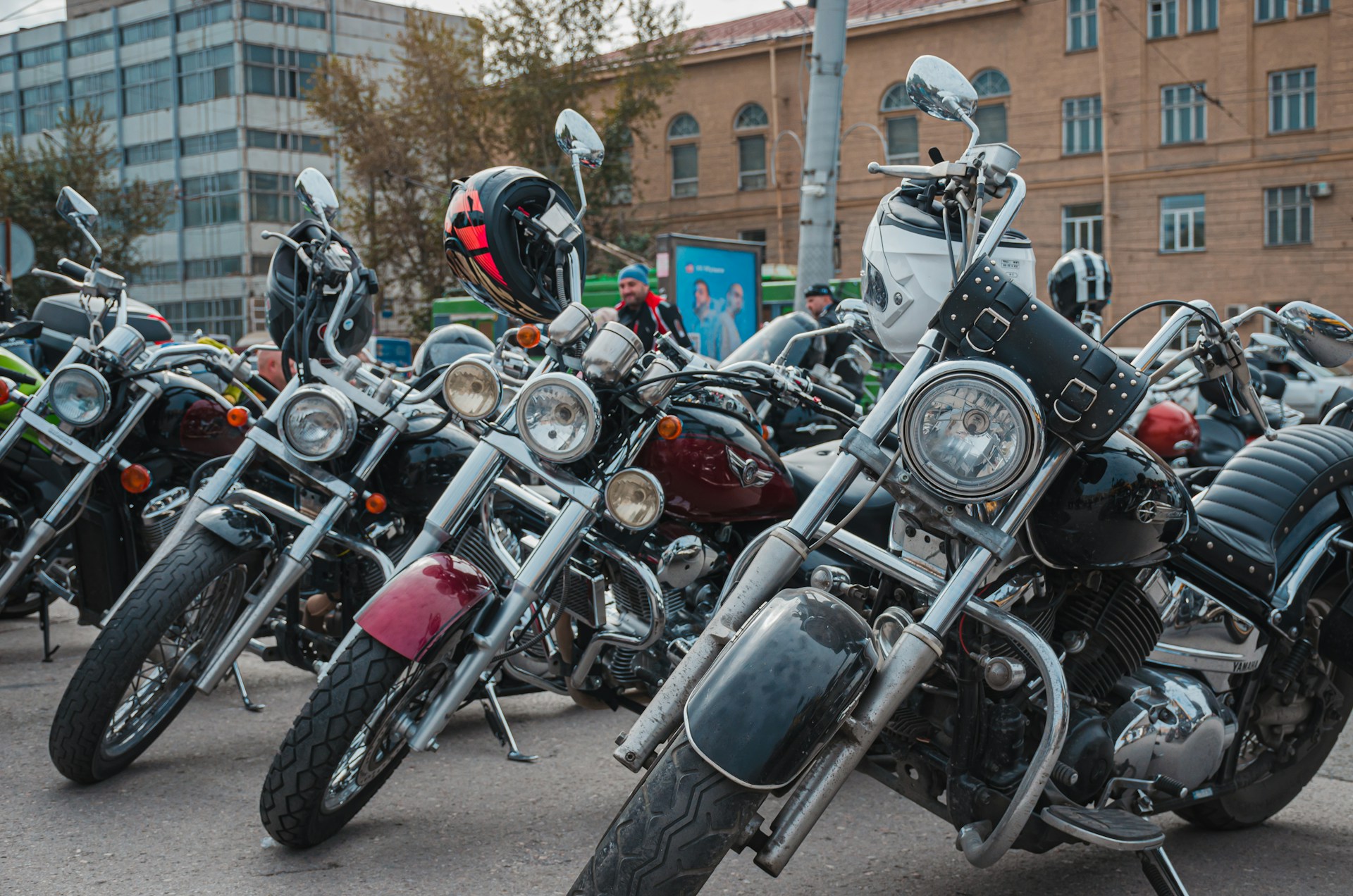
There is something uniquely powerful about riding in a group; the camaraderie, the shared road, the rhythm of motorcycles moving together through Ontario’s highways and backroads. But when something goes wrong on a group ride, the legal aftermath can be far more complicated than a typical two-vehicle collision.
Multiple riders, multiple insurance policies, and multiple potential points of liability create a legal puzzle that demands experienced legal counsel to untangle. For injured riders and their families, understanding how Ontario law assigns fault in these situations is not just helpful; it can be the difference between fair compensation and walking away with nothing.
In recognition of Motorcycle Safety Awareness Month, this blog post focuses on the risks of group motorcycle rides and where liability sits when something goes wrong.
Unique Aspects of Group Motorcycle Rides
Group motorcycle accidents differ fundamentally from standard motor vehicle collisions. In a car accident, fault typically flows between two drivers and two insurers. In a group ride gone wrong, you may be dealing with five, ten, or even twenty riders, each with their own insurance, their own version of events, and their own lawyer. Ontario’s Insurance Act and its accident benefits framework still apply, but the complexity multiplies with every additional rider involved. Injured motorcyclists need to act quickly, preserve evidence, and engage a knowledgeable Ontario personal injury lawyer before memories fade and critical documentation disappears.
It is also important to acknowledge that group rides are not inherently dangerous. Millions of safe kilometres are logged by organized riding clubs and casual groups across Ontario every year. The problem arises when something unexpected happens, and the question of legal responsibility becomes urgent. Who caused the accident? Was it one rider’s error, a collective failure of communication, or an external hazard? Ontario’s legal system has the tools to answer these questions, but only if injured parties understand how to use them.
How Ontario Law Approaches Fault When Multiple Riders Are Involved
Ontario operates under a modified tort system, meaning injured parties can sue at-fault parties for damages beyond what accident benefits cover, but fault must first be established. In a group ride accident, fault is rarely simple. Ontario’s Negligence Act allows courts to apportion fault among multiple defendants, meaning several riders could each be found partially responsible for a single crash. An injured rider could recover damages from all at-fault parties in proportion to their share of negligence.
The most common scenarios in group ride accidents involve chain-reaction collisions: one rider brakes suddenly, the rider behind cannot stop in time, and the impact cascades down the formation. In these cases, following distance, speed, and reaction time all become critical evidentiary factors. A rider who was tailgating another may bear significant fault regardless of what started the chain reaction. Similarly, if a lead rider made an unsafe maneuver (an abrupt lane change, an unannounced stop, or a turn signal failure), that rider may face liability for injuries to everyone behind them. Ontario courts have consistently held that all road users, including motorcyclists, owe a duty of care to those around them.
Beyond the riders themselves, there are other potential defendants. Road condition defects such as potholes, uneven pavement, or missing signage may implicate municipalities under the Municipal Act or the province under the Public Transportation and Highway Improvement Act. If the accident occurred during an organized event, the event organizer may have liability exposure depending on how the ride was structured and whether safety protocols were in place. Mechanical failures may implicate manufacturers or recent repair shops. Pursuing all available defendants is not just aggressive legal strategy; it is often essential to ensuring injured riders receive the full compensation they deserve.
The Role of Ride Leaders and Informal Organizers
One of the most legally contested questions in group ride accidents is whether a ride leader — the person who planned the route, set the pace, or called themselves the organizer — bears any legal responsibility for what happens. Ontario courts have not fully settled this question, but the emerging legal landscape suggests that informal organizers are not automatically shielded from liability simply because their role was unpaid or casual. If a ride leader made decisions that directly contributed to an unsafe situation, they could face a negligence claim.
Consider a scenario where a ride leader chose a route known to be hazardous, failed to communicate stopping points to the group, or pressured inexperienced riders to keep up with a pace beyond their skill level. In each of these situations, a court could find that the leader assumed a duty of care over the group and breached it. This is particularly relevant in the context of organized club rides or charity events, where the organizer has a greater degree of control over participants and the route. The fact that no money changed hands does not eliminate the duty of care; Ontario tort law has long recognized that gratuitous undertakings can still create legal obligations.
For riders injured by a leader’s poor decisions, this is an important avenue for recovery. It is equally important for ride leaders and organizers to understand their own exposure and to ensure that any organized ride they lead includes appropriate safety briefings, reasonable pace-setting, and clear communication protocols.
Insurance Complications: Whose Policy Pays and When
After a group ride accident in Ontario, the insurance picture is rarely clean. Every rider on the road is required to carry a minimum of $200,000 in third-party liability coverage under the Insurance Act, and many carry significantly more. When multiple riders are at fault, multiple insurance policies may be engaged simultaneously. Navigating these overlapping coverages by determining which insurer pays first, how limits stack, and how statutory accident benefits interact with tort claims requires the kind of expertise that most injured riders simply do not have on their own.
Ontario’s Direct Compensation – Property Damage (DCPD) regime means that for vehicle damage, your own insurer typically pays based on the fault determination. However, for bodily injury, the picture is different: you may need to pursue the at-fault party or parties through their liability insurance. If an at-fault rider is uninsured or underinsured, Ontario’s uninsured automobile coverage and the Motor Vehicle Accident Claims Fund (MVACF) provide a safety net, but accessing those protections requires precise procedural steps that must be followed correctly from the outset. Missing a deadline or filing with the wrong insurer first can jeopardize your claim.
Motorcyclists also face a persistent bias problem in Ontario’s insurance system. Insurers and even adjusters sometimes approach motorcycle claims with skepticism, particularly in group ride scenarios where assigning fault is contested.
Gathering Evidence After a Group Ride Accident in Ontario
Evidence in group ride accidents deteriorates quickly. Riders scatter. Memories shift. Skid marks get washed away. Security and dashcam footage gets overwritten. If you have been injured in a group motorcycle accident anywhere in Ontario, whether on the 401 through Toronto, the Highway 17 stretch near Sudbury, or the backroads of Muskoka, preserving evidence from the first hours after the crash can have an enormous impact on the outcome of your claim.
At the scene, if you are physically able, photograph everything: the positions of all motorcycles, road conditions, signage, skid marks, and any visible injuries. Collect the names and insurance information of every rider involved, not just the one you believe was at fault; other riders may turn out to be important witnesses or additional defendants. If bystanders or other motorists witnessed the crash, their contact information is invaluable. Many group riders now wear action cameras on their helmets; in the aftermath of an accident, those recordings can be critical evidence that you have a right to request and preserve.
A personal injury lawyer can move quickly to secure evidence that you cannot gather yourself. This includes sending preservation demands to cellular providers for location data, requesting municipality records for road maintenance history, and subpoenaing dashcam or intersection footage before it is deleted. The legal process also allows for early discovery mechanisms that can compel other riders to produce their own riding data and communications. In short, the earlier you retain legal counsel after a group ride accident, the stronger your evidentiary foundation will be.
What Compensation Can Injured Ontario Motorcyclists Pursue?
Ontario personal injury law provides injured motorcyclists with two primary streams of compensation. The first is Statutory Accident Benefits (SABS), which are available regardless of fault through your own insurer. These benefits cover medical and rehabilitation expenses, income replacement, attendant care, and other costs arising directly from the accident. While these benefits are important, they are subject to caps and limitations, and insurance companies are not in the business of volunteering the maximum you are entitled to.
The second stream is the tort claim against at-fault parties. If your injuries meet Ontario’s threshold for a tort claim (a permanent serious impairment of an important physical, mental, or psychological function), you may be entitled to damages for pain and suffering, loss of income, loss of competitive advantage in the job market, loss of housekeeping capacity, and future care costs. In cases involving catastrophic injuries, such as spinal cord damage, traumatic brain injury, or limb amputation — injuries that motorcyclists are disproportionately at risk of sustaining — the potential damages are substantial, and the stakes of getting the legal strategy right could not be higher.
Group ride accidents also raise the possibility of contributory negligence claims against the injured rider themselves. If an insurer or at-fault party argues that you were riding too closely, failed to wear proper gear, or were otherwise partially at fault, your damages could be reduced in proportion to your found fault.
Injured in an Ontario Group Motorcycle Accident? Call Tierney Stauffer LLP
If you or someone you love has been seriously injured in a group motorcycle ride accident in Ontario, the window to protect your legal rights will not stay open indefinitely. Ontario’s Limitations Act imposes a two-year limitation period on most personal injury claims, and critical evidence disappears every day the accident goes unaddressed. Do not wait.
The skilled personal injury lawyers of Tierney Stauffer LLP represent injured motorcyclists in Ottawa, North Bay, Cornwall, Kingston, and the surrounding areas. We understand the roads, the insurance system, and the unique legal challenges that group ride accidents present. To schedule a confidential consultation on your motorcycle-related personal injury matter, please contact us online or call 1-888-799-8057.